

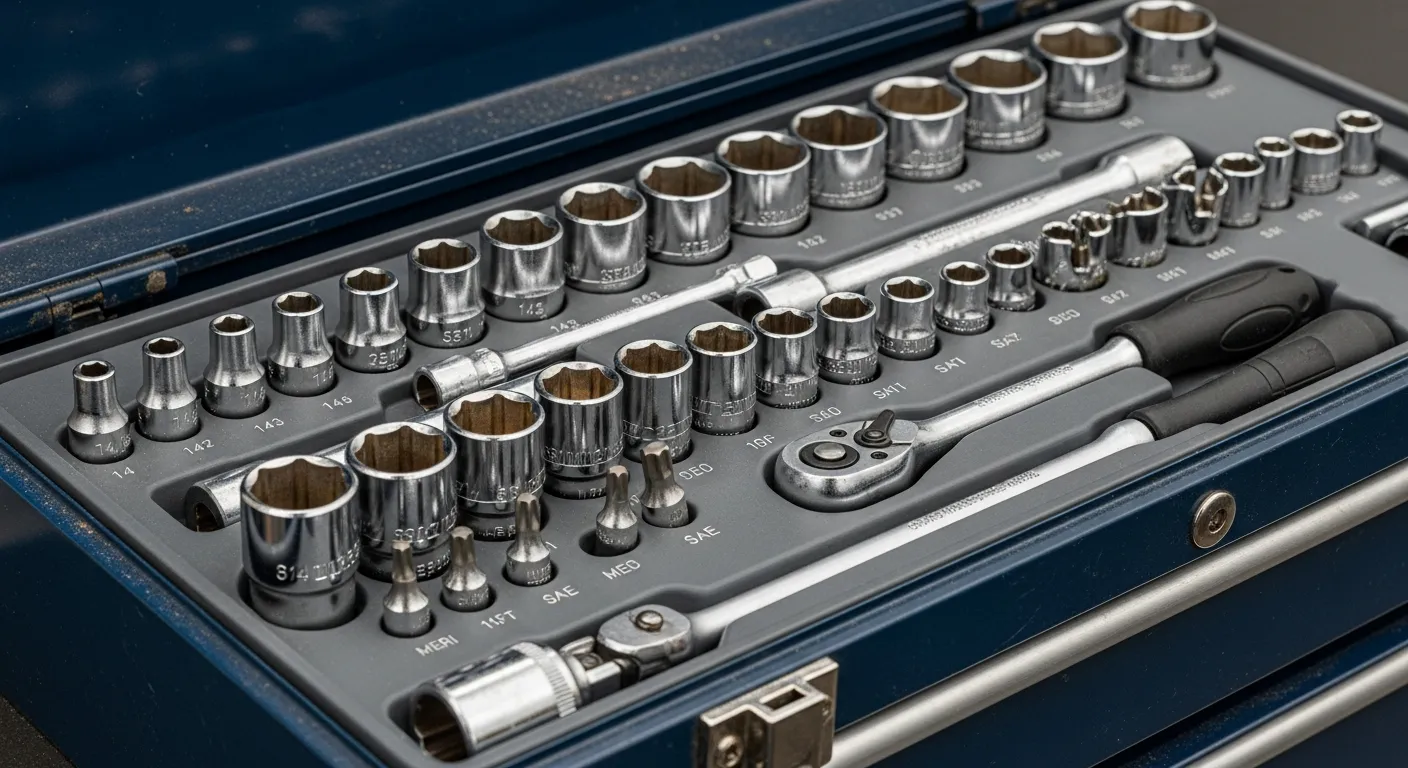
Tired of digging for the right wrench? Discover how a tool box socket organizer and smart storage strategies can transform your chaotic workspace into an efficient garage.
This guide reveals proven methods to arrange your gear efficiently. You will learn step-by-step decluttering techniques, compare top storage systems, avoid frequent setup mistakes, and get expert tips to maintain a perfectly sorted workspace for peak productivity.
The True Cost of a Cluttered Workspace

Every minute you spend searching for a specific 10mm socket is a minute stolen from your actual project. Disorganization breeds frustration, slows down progress, and often leads to misplaced or damaged equipment. Mechanics and DIY enthusiasts alike know that a streamlined workspace directly correlates with project success. When you implement a structured system, you not only save time but also extend the lifespan of your valuable gear by preventing unnecessary wear and tear.
Creating a logical layout requires more than just throwing items into drawers. It demands a strategic approach to spatial management. By categorizing items based on frequency of use, size, and function, you create a workflow that feels intuitive. Whether you operate a professional automotive shop or a weekend garage setup, optimizing your storage infrastructure is a non-negotiable step toward mechanical efficiency.
Evaluating Your Current Setup
Before implementing new systems, you must assess the current state of your equipment. Empty every single drawer and lay everything out on a large workbench. This visual inventory process exposes duplicate items, broken equipment, and tools you have not used in years. Sorting through the chaos allows you to make informed decisions about what deserves premium drawer space and what should be relegated to deep storage or donated.
During this assessment phase, group similar items together. Put all screwdrivers in one pile, pliers in another, and driving accessories in a separate zone. This physical categorization gives you a clear understanding of the volume you need to accommodate. You might realize you need a dedicated tool box socket organizer just to handle the sheer number of drive accessories you have accumulated over the years.
Why You Need a Tool Box Socket Organizer
Sockets are notoriously difficult to keep track of. They roll around, get mixed up between metric and standard sizes, and magically disappear when you need them most. Implementing a dedicated tool box socket organizer solves this universal problem instantly. By giving every single piece a designated home, you eliminate the frantic search and create a visually pleasing, highly functional drawer.
A quality tool box socket organizer does more than just hold metal cylinders; it provides visual cues. When a piece is missing, the empty slot immediately alerts you before you close up shop for the night. This prevents lost tools and ensures your set remains complete. From magnetic trays to peg-based boards, the market offers various solutions tailored to different drawer depths and user preferences.
Types of Socket Management Systems
Choosing the right tool box socket organizer depends heavily on your specific workflow and drawer dimensions. Magnetic trays are incredibly popular because they securely hold the metal pieces in place, even if the drawer slams shut. They also allow you to easily remove the entire tray and bring it to your project vehicle.
Peg-style organizers offer excellent vertical storage if you have deep drawers. They clearly display the size markings on the side of each piece, making identification instantaneous. Alternatively, rail systems provide flexibility. You can customize the number of clips on each rail, mixing and matching different drive sizes to suit your specific collection.
Step-by-Step Guide to Organizing Your Tools
Transforming a messy chest into a model of efficiency requires a methodical approach. Follow these steps to establish a system that actually works and stands the test of time.
Step 1: Purge and Clean
Start with a completely empty chest. Vacuum out the dust, metal shavings, and debris that accumulate in the corners of the drawers. Wipe down the interiors with a mild degreaser to ensure a clean slate. Next, evaluate your tools. Discard broken items, remove rust from salvageable pieces, and set aside duplicates. You only want high-functioning equipment occupying your primary storage zones.
Step 2: Line the Drawers
Never place metal tools directly on bare metal drawers. Installing high-quality drawer liners prevents your gear from sliding around when you open and close the compartments. Liners also absorb impact, protecting both the tools and the chest itself from scratches and dents. Anti-slip rubber or foam liners are excellent choices that provide grip and durability.
Step 3: Zone Allocation
Assign specific categories to specific drawers based on ergonomics and frequency of use. Place your most frequently used items, like screwdrivers and your trusty tool box socket organizer, in the top or waist-level drawers for easy access. Heavy items, such as hammers, pry bars, and power tools, belong in the bottom drawers to maintain a low center of gravity and prevent the chest from tipping over.
Step 4: Implement Micro-Storage Solutions
Once you have allocated your zones, use specific inserts to keep items separated. Use wrench racks to display wrenches at a uniform angle. Employ plier racks to store pliers vertically, maximizing space. Use a tool box socket organizer for your drive accessories. Custom foam inserts are also highly effective for creating bespoke cutouts for specialty equipment.
Expert Insights for Maximum Efficiency

Professionals who work with their hands daily have developed ingenious methods for keeping their gear accessible. One major consensus among experts is the importance of color-coding. Using red for standard (SAE) and blue for metric sizes drastically reduces identification time. You can apply this color-coding to your tool box socket organizer, wrench racks, and even the handles of the tools themselves.
Another expert tip is to store tools in their “ready” state. For example, keep your cordless drills with a charged battery attached, and store air tools with the air fitting already installed. This eliminates the micro-steps required to prep a tool for action, allowing you to jump straight into the work.
Maximizing Vertical Space
Many people underutilize the vertical space within their drawers. If you have deep bottom drawers, do not just pile items on top of each other. Use vertical dividers or tiered trays to create layers of storage. Storing pliers vertically in a wire rack allows you to fit three times as many pliers in the same footprint compared to laying them flat.
Comparison Table: Tool Storage Solutions
To help you choose the best systems for your setup, review this comparison of popular storage methods:
|
Storage Solution |
Best For |
Pros |
Cons |
|---|---|---|---|
|
Tool Box Socket Organizer (Magnetic) |
Sockets, small bits |
Holds items securely, portable |
Can magnetize tools over time |
|
Pegboard Systems |
Hanging wrenches, pliers |
Highly visible, customizable |
Requires wall space |
|
Custom Foam Inserts |
Precision tools, measuring gear |
Perfect fit, visual missing-item check |
Time-consuming to cut |
|
Wrench Racks (Angled) |
Combination wrenches |
Saves drawer space, size order |
Only works for standard shapes |
|
Plastic Bins |
Screws, nails, small parts |
Cheap, easily swappable |
Can become messy if overfilled |
Common Mistakes to Avoid
Even with the best intentions, it is easy to fall into organizational traps that undermine your efforts. Recognizing these pitfalls ensures your system remains functional long after the initial setup.
One major mistake is overpacking drawers. Just because a tool fits into a drawer does not mean it belongs there. Overcrowding makes it difficult to retrieve items and increases the risk of slicing your hand on a sharp edge while digging around. Leave at least 10% of the drawer space empty to allow for easy retrieval and future additions.
Another frequent error is ignoring the natural workflow. Storing your ratchets in drawer one, but placing your tool box socket organizer in drawer four, creates unnecessary movement. Keep complementary items together. Ratchets, extensions, and sockets should always share the same real estate to streamline your mechanical tasks.
The Danger of “Miscellaneous” Drawers
Never create a “miscellaneous” or “junk” drawer in your chest. This becomes a black hole where homeless items go to disappear forever. If a tool does not fit into a specific category, you either need to create a new category for it or question whether it belongs in the chest at all. Force yourself to assign a logical home to every single piece of equipment.
Maintaining Your System Long-Term

Organization is not a one-time event; it is a continuous practice. To keep your workspace pristine, you must develop strict habits. The most critical rule is the “return immediately” policy. When you finish a task, clean the tool and place it directly back into its designated slot. If you used your tool box socket organizer, ensure every socket is snapped back onto its peg before turning off the garage lights.
Conduct a brief audit of your chest once a month. Wipe away any accumulated grease, reorganize items that may have migrated out of their zones, and check for any missing pieces. Maintaining the system takes only five minutes a month, whereas completely reorganizing a ruined chest takes an entire weekend.
Upgrading as You Grow
As your skills advance, your tool collection will naturally expand. Your storage system must be adaptable. Modular storage components allow you to shift layouts without starting from scratch. When you buy a new set of metric wrenches, you can simply adjust the width of your dividers to accommodate the addition. Always plan for a 20% expansion capacity when designing your initial layout.
You can also look into advanced workshop infrastructure as your needs grow, integrating your rolling cabinets with stationary workbenches and wall-mounted pegboards for a comprehensive ecosystem.
Conclusion
Mastering your workspace directly elevates the quality of your work. By implementing dedicated storage solutions—especially a high-quality tool box socket organizer—you eliminate wasted time and protect your valuable investments. Start by decluttering, strategically assign your drawer zones, and commit to returning items to their proper place. Transform your setup today and experience the satisfaction of a perfectly organized garage.
FAQs
What is the best way to sort standard and metric tools?
The most effective method is utilizing color-coding and physical separation. Keep metric items on the right side of the drawer (often denoted with blue markers) and standard SAE items on the left (denoted with red markers).
How do I choose the right tool box socket organizer?
Assess your drawer depth and workflow. If you frequently move around the garage, a magnetic or locking rail tool box socket organizer is best. If you prefer keeping them stationary in a deep drawer, vertical peg trays offer excellent visibility.
Are foam inserts worth the effort?
Yes, custom foam inserts are highly recommended for precision instruments, aviation mechanics, or anyone who wants a visual inventory system. They take time to cut, but they offer the ultimate protection and organization.
How can I stop my tools from sliding when opening drawers?
Install non-slip rubber or foam drawer liners. These grip the bottom of the tools and provide cushioning, preventing items from shifting and crashing into each other.
What should I store in the bottom drawer of my chest?
The bottom drawers should house your heaviest, bulkiest items. Think power tools, heavy mallets, pry bars, and large specialized puller kits. This keeps the chest’s center of gravity low.
How do I store pliers to save space?
Instead of laying them flat, use a wire plier rack to stand them vertically. This allows you to fit dozens of pliers in a single drawer while keeping the handles easily accessible.
Is it better to organize by tool type or by project?
Organizing by tool type (e.g., all screwdrivers together) is generally better for a master chest. However, creating small, portable “project kits” for specific tasks (like an oil change kit) can supplement your main storage.
What do I do with duplicate tools?
Store duplicates in a separate, less accessible location, or create a portable emergency bag for your vehicle. Keep only your highest quality, primary tools in your main daily-use chest.
How often should I clean my storage chest?
You should wipe down the exterior weekly and perform a deep clean of the drawers every six months. Always wipe grease off tools before returning them to prevent grime buildup.
Can I 3D print my own organizers?
Absolutely. 3D printing allows you to create highly customized dividers, wrench racks, and a custom tool box socket organizer that perfectly fits the exact dimensions of your specific equipment and drawers.